These poor women are illiterate or semi-literate who earn living through their own labour.
They are broadly involved in following occupations.
Traditional Skills
Like weaving, hand block printing, tie and dye, hand embroidery, applique work, mirror work, bead work and so on…
Family occupations
Like cattle rearing, tailoring, blacksmiths, potters, small and marginal farmers, salt farmers.
Traditional / Manual unsecured work
Like waste pickers, construction workers cleaners, hand cart pullers, head loaders, agriculture labours.
Vending
Vegetables and fruits selling in the baskets sitting on the footpaths or standing in the streets’ pavements with hand carts, old cloth selling, fish vending, toys and miscellaneous house hold goods selling, producing and selling snacks.
All this work involves long working hours, hard, tedious and tiresome laborious work in harsh conditions giving meagre income. To bring them out of this vicious cycle and drudgery, it is imperative to equip them with skill enhancement, skill diversification and new skilled work trainings so as to transform them from labourers to skilled workers to enable them to earn higher wages, and respectful living.
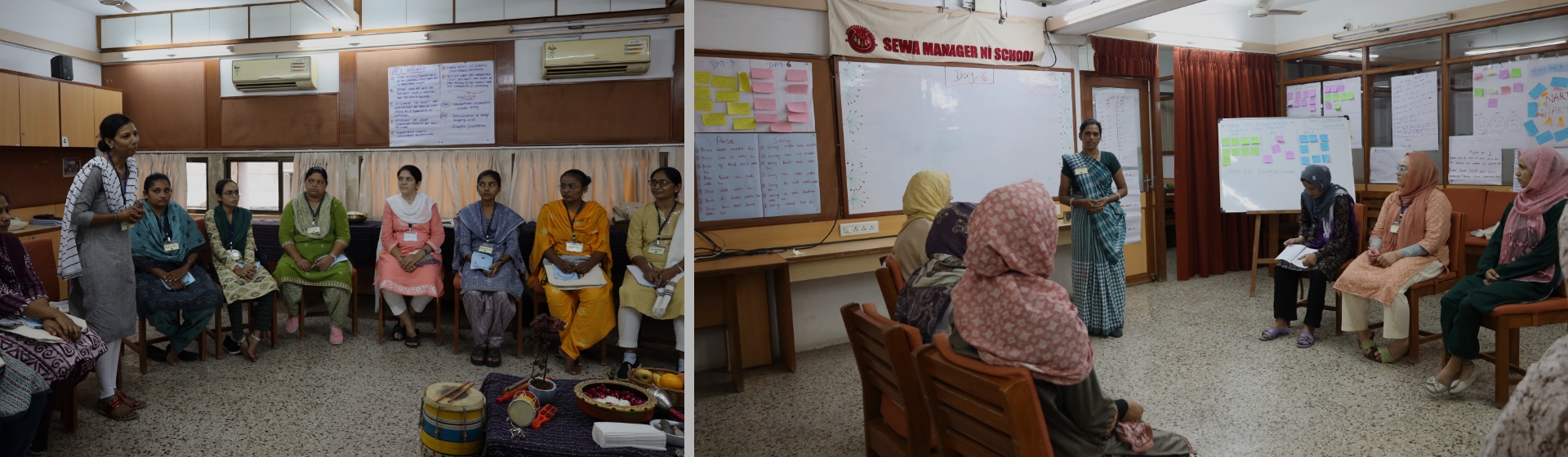
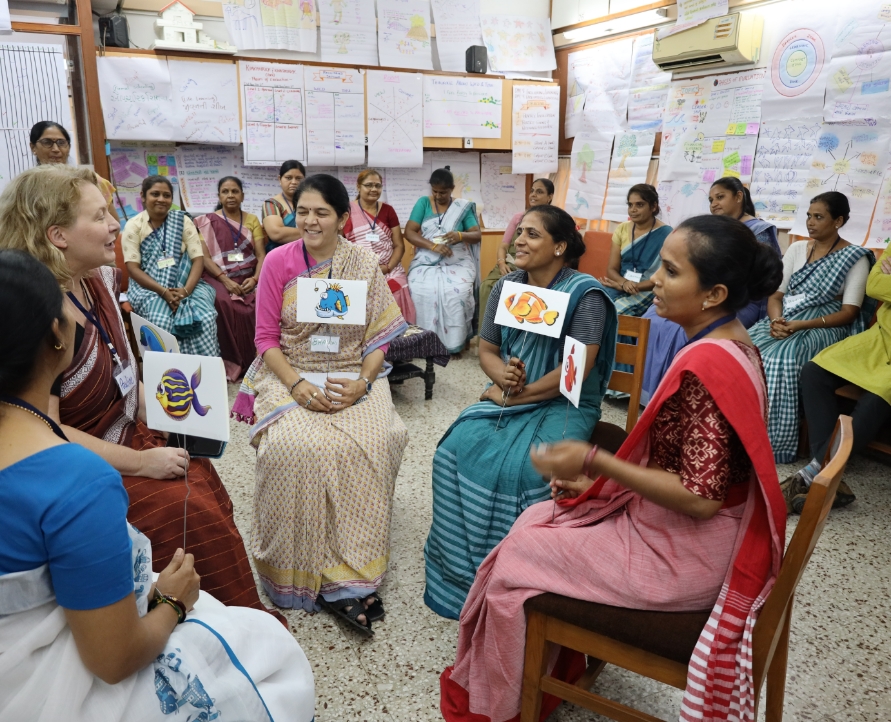
Mahila SEWA Trust has taken up the mammoth task of imparting various types of trainings to the poor, illiterate, semi-literate women to make them capable to run their own enterprises to attend overall betterment and self reliance for themselves and their families.
Following types of trainings are conducted.
Awareness trainings to make them realize and understand
- Their own status and rights as workers.
- Importance of their work as productive work.
Vocational trainings
Skill enhancement, skill diversification and new skilled work trainings as per market demands.
Capacity building training
To build their self esteem and self confidence to articulate their issues and handle the adverse situations.
Management training
To build their capacities and capabilities to run their own micro enterprises.
ICT trainings
To train the women to use mobile phones with apps, computer, audio, video, radio and other ICT tools to run their micro enterprises.